
Key Takeaways
- Understanding trauma gently opens the door to seeing behavior through a lens of compassion rather than judgment.
- Building trust through consistency helps create a sense of safety for children who have experienced broken promises or instability.
- Healing together as a family supports both the child and the caregiver, honoring the shared journey of growth, resilience, and restoration.
- Faith, community, and unconditional love offer grounding strength and a sense of belonging for families navigating trauma‑informed parenting.
If it feels supportive, take a slow breath and notice one small sensory detail around you—the warmth of a mug in your hands, the softness of the chair beneath you, or the quiet hum of the room. You’re invited to explore this topic from a place of gentleness, curiosity, and compassion. Parenting a child who has experienced trauma is not simply a role; it is a calling that asks for courage, tenderness, and a willingness to grow alongside the child you love.
For many caregivers, this journey begins with a mixture of hope and uncertainty. You may feel deeply committed to offering safety and stability, yet unsure how to navigate the emotional storms that trauma can bring. You’re not alone. Families across the foster care community, adoptive community, and kinship care networks share similar questions, longings, and moments of both exhaustion and profound joy.
At its heart, parenting a child who has experienced trauma is about rebuilding the foundation of trust—brick by brick, moment by moment. It’s about becoming a harbor, a place where a child can rest, explore, and eventually believe that love can be safe again.
Understanding Trauma: Seeing Beneath the Surface
In the foster care community, trauma is not an abstract concept—it’s a lived experience that shapes how a child sees the world. Trauma can rewire the developing brain, often leaving children in a heightened state of alertness. Their nervous system may be working overtime, scanning for danger even in safe environments.
This can look like:
- sudden outbursts
- withdrawal or shutting down
- defiance or refusal
- anxiety that seems disproportionate
- difficulty trusting adults
These behaviors are not signs of a “bad child.” They are signs of a child doing their best to survive with the tools they have.
A trauma‑informed approach invites us to shift from “What’s wrong with this child?” to “What happened to this child—and what do they need to feel safe?” This shift matters deeply in foster care and adoptive parenting, where children may carry invisible wounds from neglect, loss, or instability.
Imagine a child’s heart like a fragile shoreline after a storm. The waves have been rough, the sand unsettled. Your presence becomes the steady tide—predictable, calm, and healing.
Why This Matters in the Foster Care Community
Children in foster care or post‑adoption settings often navigate layers of grief, identity questions, and attachment disruptions. Trauma‑informed parenting helps caregivers respond with empathy rather than punishment, connection rather than control.
When caregivers understand trauma:
- children feel seen rather than misunderstood
- relationships deepen
- emotional regulation becomes more possible
- healing becomes a shared process
This approach doesn’t erase the past, but it creates a new story—one where safety, belonging, and love are possible.
Building Trust Through Consistency: The Foundation of Healing
For a child who has experienced trauma, trust is not automatic. It is earned slowly, through repeated experiences of safety. Consistency becomes a language of love.
This might look like:
- keeping your promises, even the small ones
- showing up when you say you will
- maintaining predictable routines
- offering calm responses even when emotions run high
Think of trust like a lighthouse. At first, the child may not believe the light will always shine. But as it continues—night after night—they begin to rely on it. They begin to believe that home can be a harbor, not a storm.
In trauma‑informed parenting, consistency is not about perfection. It’s about presence. It’s about saying with your actions, “You can count on me,” and proving it again and again.
Embracing Empathy Over Control
Traditional discipline strategies often fall short when parenting a child who has experienced trauma. These children are not misbehaving to manipulate or disrespect; they are communicating unmet needs, fear, or overwhelm.
A trauma‑informed approach might sound like:
- “I’m here with you.”
- “It makes sense that you feel scared.”
- “Let’s figure this out together.”
- “Your feelings are real, and you’re safe with me.”
Instead of isolating a child during a meltdown, you might sit nearby, offering quiet presence. Instead of escalating with raised voices, you might soften your tone. Instead of demanding immediate compliance, you might offer choices that restore a sense of control.
This doesn’t mean allowing harmful behavior. It means addressing behavior through connection rather than fear.
A simple metaphor:
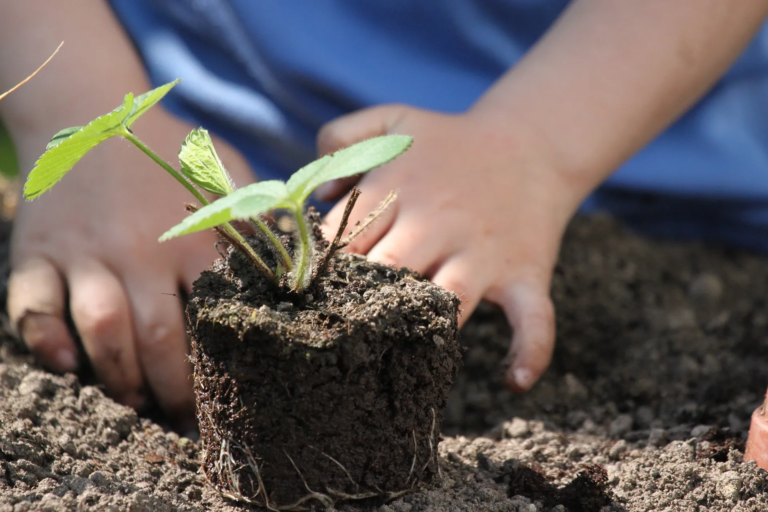
When a plant wilts, we don’t scold it. We check the soil, the sunlight, the water. We tend to the roots. Children are no different.
The Power of Unconditional Love
Children who have experienced trauma often expect rejection. They may push boundaries, test limits, or withdraw emotionally—not because they don’t want love, but because they fear losing it.
Unconditional love becomes a healing balm.
It sounds like:
- “I love you on your hard days.”
- “I’m not leaving.”
- “You don’t have to earn my care.”
For families who draw strength from faith, this love mirrors the steadfast, grace‑filled love God extends to us. It is patient, enduring, and rooted in hope.
Unconditional love doesn’t excuse harmful behavior, but it refuses to let behavior define the child. It sees the hurt beneath the surface and responds with compassion.
Healing Together: A Shared Journey of Growth
One of the most overlooked truths about parenting a child who has experienced trauma is that healing is not one‑sided. Caregivers often discover their own wounds, triggers, and growth edges along the way.
You may notice:
- old patterns resurfacing
- moments of overwhelm
- unexpected grief
- the need for support or therapy
This is not failure. It is part of the journey.
Healing becomes a family process—one that may include counseling, support groups, trauma‑informed training, or leaning into community resources. In the foster care community, connection with other caregivers can be a lifeline. Shared stories remind you that you’re not alone, and that your experiences are valid.
Imagine healing as a woven tapestry. Each thread—your growth, the child’s progress, the support of community, the grounding of faith—creates something strong and beautiful.
Leaning on Faith and Community Support
For many families, faith becomes an anchor in the unpredictable waters of trauma‑informed parenting. Scripture offers reminders of strength, renewal, and divine companionship. Isaiah 40:29 speaks to this beautifully: “He gives strength to the weary and increases the power of the weak.”
Faith can offer:
- grounding during emotional storms
- hope when progress feels slow
- a sense of purpose in the calling to love
- reassurance that you are not carrying this alone
Community support—whether through church, mentors, therapists, or foster care networks—creates a circle of care around your family. No one is meant to navigate trauma in isolation. Connection is part of healing.
A Story of Safety and Belonging
Picture a child standing at the edge of a harbor. The water is calm, but they hesitate. They’ve known storms—waves that crashed without warning, winds that tore through their sense of safety. Now they see a small boat waiting for them, steady and open.
You are that boat.
At first, the child may step in cautiously, ready to leap out at the slightest shift. But over time—through your consistency, empathy, and unconditional love—they begin to trust the gentle rocking. They begin to believe that this harbor is real, that this home is safe, that this love is steady.
This is the heart of trauma‑informed parenting: creating a place where a child can finally rest.
Celebrating Small Wins
Healing is rarely linear. It moves in spirals—forward, backward, sideways, and forward again. In trauma‑informed parenting, small wins matter deeply.
Celebrate moments like:
- a genuine smile
- a shared laugh
- a calm response during a stressful moment
- a new skill or coping strategy
- a moment of vulnerability
These are signs of trust taking root. They are reminders that your presence is making a difference.
Finding Joy in the Journey
Even in the hard days, there are moments of profound beauty. The first time a child reaches for your hand. The quiet moments of connection. The unexpected giggles. The deepening bond that grows not from perfection, but from presence.
Joy doesn’t erase the challenges, but it illuminates them with meaning.
Shared Opportunity for Growth
God has placed this child in your life for a reason. As you guide them toward healing, you are also being shaped—into someone more patient, more compassionate, more resilient, and more attuned to love.
Parenting a child who has experienced trauma is sacred work. It is messy, miraculous, and deeply transformative. You are not expected to do it perfectly. You are simply invited to show up with love, again and again.
Philippians 1:6 offers a grounding promise: “He who began a good work in you will carry it on to completion.” This includes the work unfolding in your family, in your heart, and in the life of the child you are nurturing.
A Hopeful, Grounding
As you continue this journey, you are invited to pause and notice one small thing that brings you peace—a breath, a sound, a memory, a moment of stillness. Healing happens in these small spaces.
You have agency. You have wisdom. You have the capacity to create safety, belonging, and connection. And you can take each step at your own pace.
Your home can be a harbor.
Your love can be a lighthouse.
Your presence can be the beginning of healing.
Whenever you’re ready, you can return to these truths and continue building a foundation of trust, compassion, and hope—one moment at a time.